
If You Have Diabetes, Taking Care of Your Feet is Important. These Tips Can Help.
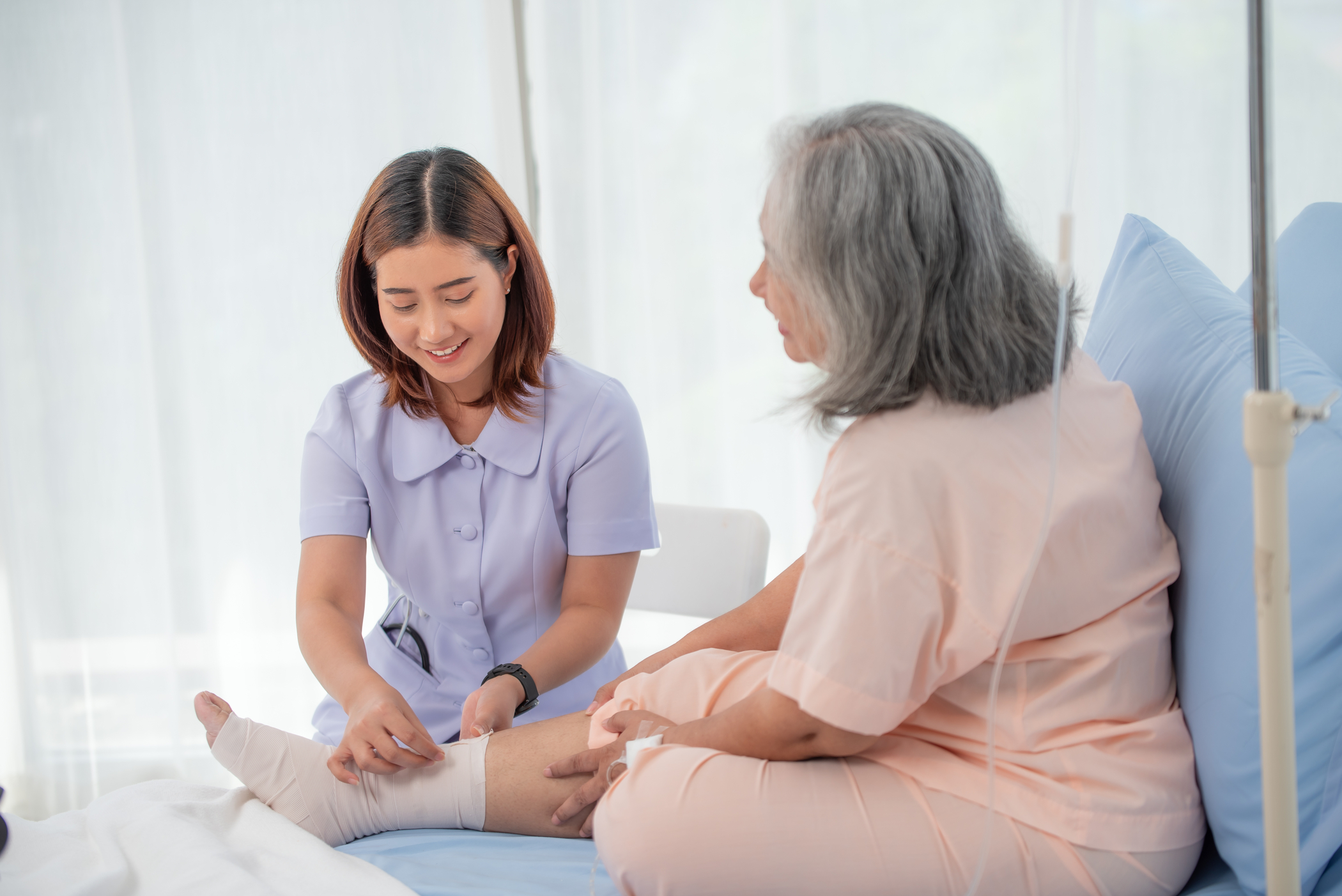
Diabetics can experience numbness in their extremities that can make it hard to recognize troubling symptoms and foot injuries. Learn how to properly care for your feet to help avoid chronic wounds and serious complications.
Q. How does having diabetes complicate wound healing?
Diabetes interferes with the generation of new cells. High blood sugars can put you at increased risk for infection, blunting the response to bacteria. Diabetes can also cause decreased blood circulation in the feet and legs, which can lead to ulcers and slow healing. And finally, diabetes can impair the nervous system so wounds are not noticed until they are advanced.
Q. What do I do if a wound isn’t healing?
Make sure wounds are kept clean and protected. Wounds should be bandaged with clean materials and not left open to air. Taking pressure off the wound is important. The less walking on the wound, the quicker it can heal. If a wound hasn’t healed in three weeks, it’s considered chronic. At that point, you should seek care. We can coordinate further care, investigate the barriers to healing, and organize an advanced approach.
Q. Is there anything I can do to help speed up the healing process?
Proper nutrition is a big factor in managing your diabetes and in healing wounds. Follow the ADA diet guidelines; limit the amount of sugar in your diet. Make sure to incorporate protein in all your meals; such as meat, dairy products, and nuts. All new tissue is made from protein, and wounds heal quicker when enough protein is consumed.
Q. What treatments are available for complex or hard-to-heal wounds?
In certain problem wounds, hyperbaric oxygen therapy may be considered as a treatment. Patients are placed in a chamber at an increased atmospheric pressure filled with pure oxygen. This dramatically increases the blood’s ability to carry oxygen. Hyperbaric oxygen therapy decreases inflammation, kills bacteria, makes antibiotics work better, releases new cells and growth factors to repair tissue, and speeds healing.
The team of wound-care specialists is here to help. Our multidisciplinary treatment program is designed to complement total patient health and consists of a team of specialized professionals including:
- Physicians skilled in wound care and hyperbaric oxygen therapy
- Nurses with advanced training in treating chronic wounds
- Technicians who perform noninvasive studies and therapies
- Helpful staff ready to guide you through each administrative step and answer questions